Tuesday, December 11, 2018

Pomeranian Puppies for Sale | Pomeranian Dogs and Puppies for sale in Florida | Find Pomeraian Puppy for sale in USA | Buy Pomeraian Puppies online


    The Pomeranian (often known as a Pom) is a breed of dog of the Spitz type that is named for the Pomerania region in north-west Poland and north-east Germany in Central Europe, Pomeranian Puppies for Sale  Classed as a toy dog breed because of its small size, the Pomeranian is descended from the larger Spitz-type dogs, specifically the German Spitz. It has been determined by the Federation International to be part of the German Spitz breed; Pomeranian Dogs and Puppies for sale  and in many countries, they are known as the Add to dictionary ("Dwarf-Spitz").
The breed has been made popular by a number of royal owners since the 18th century. Queen Victoria owned a particularly small Pomeranian and consequently, the smaller variety became universally popular. During Queen Victoria's lifetime alone, the size of the breed had decreased by half. Overall, the Pomeranian is a sturdy, healthy dog. Find Pomeranian puppy online  The most common health issues are luxation patella and tracheal collapse. More rarely, the breed can have Alopecia X, a skin condition colloquially known as "black skin disease". This is a genetic disease which causes the dog's skin to turn black and lose all or most of its hair. As of 2013, in terms of registration figures, since at least 1998, the breed has ranked among the top twenty most popular breeds in the USA, and the current fashion for small dogs has increased their popularity worldwide.


      Puppy Appearance

Pomeranians are small dogs weighing 1.8–3.5 kilograms (5.2–6.7 lb) and standing 4.0–10 inches (12–27 cm) high at the withers. They are compact but sturdy dogs with an abundant textured coat with a highly plumed tail set high and flat.[3] The top coat forms a ruff of fur on the neck, which Poms are well known for, and they also have a fringe of feathery hair on the hindquarters.
The earliest examples of the breed were white or occasionally brown or black. Queen Victoria adopted a small red Pomeranian in 1888, which caused that color to become fashionable by the end of the 19th century. In modern times, the Pomeranian comes in the widest variety of colors of any dog breed, including white, black, brown, red, orange, cream, blue, sable, black and tan, brown and tan, spotted, brindle, plus combinations of those colors. The most common colors are orange, black, or cream/white.


    Temperament
Pomeranians Puppies are typically friendly, playful and lovely; but they can be aggressive with other dogs to try to prove themselves. Pomeranians are alert and aware of changes in their environment, and barking at new stimuli can develop into a habit of barking excessively in any situation. They are some what defensive of their territory and thus may bark when they hear outside noises. Pomeranians are intelligent, respond well to training, and can be very successful in getting what they want from their owners. They are extroverted and enjoy being the center of attention, but they can become dominant if not well trained and socialized. The use of toys can be an effective tool in training Pomeranians to spend time alone.


      Health
  
The life expectancy of a Pomeranian is 13 to 17 years. A well-bred dog on a good diet with appropriate exercise will have few health problems; and, if kept trim and fit, a Pomeranian is a sturdy dog. The breed does have similar health issues to many dog breeds, although some issues such as hip dysplasia are uncommon because of the Pomeranian's lightweight build. Some health issues can develop as a result of lack of attention to grooming and teeth-, ear-, and eye-cleaning. With routine care, these problems can be avoided. They are prone to early tooth loss, and dry food is Add to are one of the breeds with the smallest average litter size, with various sources giving numbers of between 1.9 and 2.7 puppies per litter.


     Puppies History
     
   The forerunners of today's Pomeranian breed were large working dogs from the Arctic regions. These dogs are commonly known as the  or Spitz type, which is German for "sharp point" which was the term originally used by Count Eberhard zu Say in the 16th century as a reference to the features of the dog's nose and muzzle. The Pomeranian is considered to be descended from the German Spitz.
The breed is thought to have acquired its name by association with the area known as Pomerania which is located in northern Poland and Germany along the Baltic Sea. Although not the origin of the breed, this area is credited with the breeding which led to the original Pomeranian type of dog. Proper documentation was lacking until the breed's introduction into the United Kingdom

                                
           Popularity
  
     The Pomeranian Puppy has been among the more popular dog breeds in the United States, featuring consistently in the top 20 of registered AKC dog breeds since at least 1998, when it was ranked 10; the breed was 16 in the 2011 rankings, dropping two spots from the previous year, In 2012 and 2013 it remained in the top twenty and was ranked at 19.
It is not listed in the top 20 breeds in the UK in either 2007 or 2008. In Australia their popularity has declined since 1986, with a peak of 1,128 Pomeranians registered with the Australian National Kennel Council in 1987; only 577 were registered in 2008. However, this is an increase from 2004, when only 491 dogs were registered.
It is more popular in American cities in 2008, ranking joint tenth (with American Bulldog) in Detroit and Orlando, ninth in Los Angeles, a joint seventh in Seattle (again, with the American Bulldog), but third in Honolulu, only bested by the Labrador Retriever and the German Shepherd


        travisplyer1982@gmail.com or call or text +1 (765-705-0832) even contact us via WhatsApp's as well    +1 (765-705-0832)

   
                   Pomeranian puppies for sale  - Shipped Worldwide

Monday, December 10, 2018

Siberian Husky Dogs and Puppies for sale--Husky | Dogs & Puppies for Sale --Husky puppies and Husky dogs information --How to Buy a Siberian Husky Puppy--Find Siberian Husky puppies for sale


   The Siberian Husky (also known as the ‘Chukka’, ‘Kashia’, or ‘Arctic Husky’) originated as a sled dog for the Chukchi tribe of Eastern Siberia (in northern Russia) several thousand years ago. Find Siberian Husky puppies for sale, It was imported to Alaska in the early 20th century during the Alaskan gold rush. The Siberian Husky attracted attention when it completely dominated native breeds in the 400 mile, How to Buy a Siberian Husky Puppy  ‘All-Alaska Sweepstakes’ race from Nome to Candle in 1910, the second year in which it competed. Husky puppies and Husky dogs information  It gained further prominence in 1925 when a gold miner named Leonhard Sepal used a now-famous team of Siberian Huskies to make an urgent delivery of diphtheria serum to Nome, saving thousands of lives. This delivery became known as the ‘Great Race of Mercy’ and attracted much attention to the Siberian Husky. Husky | Dogs & Puppies for Sale  A statue honoring Sepal's team stands today in Central Park, Today the Siberian Husky is one of the most popular northern breeds, serving as a pet, sled racing dog, and show dog. Siberian Huskies appear prominently in Disney films ‘Snow Dogs’, ‘Eight Below’, and ‘Iron Will’, all based to some degree on true stories of heroic Siberian Huskies


            Husky Short History
  
   The Siberian Husky arrived in North America in the fall of 1908 without fanfare. Most other dogs had taken the more conventional route to our shores across the Atlantic Ocean from countries where they had become well established breeds. This unknown breed of Northern dog, however, sneaked through a remote back door to America quietly and unobtrusively at a point where the peninsulas of Asia and America almost meet. The Siberians attained enormous popularity as racing dogs and the amusement prior to the 1910 race turned to admiration. Although Ramsay's dogs and their progeny went on to win many races through the years, it was Goose's team of stoic little aliens who set the stage for the importation of the greatest of northern racing breeds, the Siberian dog, later to be known as the Siberian Husky.


   Character

        The Siberian Husky is adventurous, clever, and stubborn. It wants to be everyone's friend, a fact that makes it a less-than-ideal watchdog. Siberian Huskies love to wander, and they are full of energy and independence. The Siberian Husky is known to stage frequent and elaborate escape attempts by jumping over or tunneling under walls. It is very energetic and active when playing, and tends to make interesting whoops, yowls, and ululations.      


   Coat                                                              

 The Siberian Husky has a dense, smooth undercoat and coarse outer coat of short, straight hairs. Every color and combination is acceptable; common colors are pure white or white with black, grey, or copper-red, all with possible blond markings. There are a variety of striking facial markings. Siberian Huskies shed twice a year.


   Size                                                                

 The Siberian Husky has a shoulder height of 51-60 cm (20-23.5 in) and weighs 15-28 kg (35-60 lbs). It has a round skull with almond-shaped eyes and triangular, erect, furry ears. Some Siberian Huskies have a ‘winter nose’ which fades to pink in the winter; the color change can be permanent in older dogs. The Siberian Husky’s eyes are blue, green, brown, or hazel. ‘Bi-eyed’ Siberian Huskies have one blue eye and one brown or hazel eye while ‘parti-eyed’ Siberian Huskies have irises of blue mixed with another color. The Siberian Husky is one of only a select few breeds which is allowed different-colored eyes in the show ring, and one of only a few breeds to commonly have blue eyes. Siberian Huskies have an arched neck, sickle-curved tail, and furry, oval feet. They have a wolf-like appearance.

                                                                          
  Temperament

The Siberian Husky gets along well with other Huskies, but needs to be trained carefully to interact with other household pets. It tends not to get along with cats or other small animals. Siberian Huskies deal well with children. It is wise to have more than one Siberian Husky because they do not enjoy being left alone.

                                                                   
    Health
 Siberian Huskies require weekly grooming with a brush and comb, particularly on the rear legs, more often when shedding. Bathe only when necessary. The Siberian Husky has a lifespan of 10-14 years. It is generally healthy, but prone to eye problems such as glaucoma and cataracts, and cancer when older. The Siberian Husky has a high propensity for obesity if under exercised, and requires less food than one might expect for its large size; consult your veterinarian for dietary information. Fish oil, which can be found in sardines or flaxseed oil, is a recommended part of the Siberian Husky’s diet. The Siberian Husky is not well suited to warm climates; it needs a cool place to sleep in the summer.


    Training
    The Siberian Husky will only obey commands that make sense to it. It is very independent-minded, so handlers need to have considerable patience and a good understanding of the Siberian Husky’s nature.

                                                                             
  Activity                                                   

 The Siberian Husky was bred to pull a heavy sled for countless miles; it demands to be involved in physical activities. If you can't have it pull a sled, let it run alongside you as you jog or ride a bicycle, ideally for at least an hour every day. Siberian Huskies that do not get enough exercise become destructive and loud. They have a low heat tolerance, so do not over exercise them in warm weather. The Siberian Husky is not suited to apartment life.               


            travisplyer1982@gmail.com or call or text +1 (765-705-0832) even contact us via WhatsApp's as well    +1 (765-705-0832)


    Siberian Husky puppies for sale  - Shipped Worldwide
                 

Sunday, December 9, 2018

English Bulldog Puppies for Sale from Dog Breeders-Buying English Bulldog Puppies for sale-How to Find an English Bulldog Puppy For Sale-Tips On Buying an English Bulldog-Free English Bulldogs Puppies | Man's Best friend


   The English Bulldog (or simply ‘Bulldog’) was bred in England in the 1500’s for bull baiting, a popular gambling ‘sport’ in which one or more dogs were matched up against a chained bull (bear).Buying English Bulldog Puppies for sale These dogs were bred for sheer fighting capacity, and they were famed for latching onto their prey with an iron jaw which they refused to release—they could even suffocate opponents this way. English Bulldogs fell in popularity when bull baiting was outlawed in the 1830’s, but a committed group of devotees kept the breed alive and selected away any trace of ferocity, How to buy English bulldog puppies online Easily recognizable by their distinctive and adorable ‘sour mug’, English Bulldogs serve as the mascots of dozens of sports teams, most famously Georgetown University, English Bulldog Puppies for Sale from Reputable Dog Breeders Other famous English Bulldogs include Handsome Dan, the Yale mascot, and Tyson, How to Find an English Bulldog Puppy For Sale the skateboarding Bulldog of internet fame. English Bulldogs are simultaneously a symbol of British tenacity and an immensely popular American pet.
     Bulldogs have a longstanding association with English culture, as the BBC wrote: "to many the Bulldog is a national icon, symbolizing pluck and determination. During World War II, Bulldogs were often likened to Prime Minister Winston Churchill and his defiance of Nazi Germany. When the English settled in the Americas, their Bulldogs came with them, Free English Bulldogs Puppies A few dedicated bulldog fanciers formed the Bulldog Club of America in 1890 and it was incorporated under the laws of the State of New York on November 29, 1904


     Appearance\Size

The English Bulldog has a shoulder height of 31-36 cm (12-14 in) and weighs 22-25 kg (48-55 lbs). It is known for its short, wide muzzle, undershot jaw, and wide, droopy face giving the appearance of a frown. English Bulldogs have short legs and tails, rounded chests, and compact, muscular bodies.  The coat is short, flat, and sleek, with colors of red, fawn, white, brindle, and piebald, Bulldogs can come in many colors like white, a light black, and a brown color.


         Coat
  
The English Bulldog has a short, smooth, glossy coat which can be beige, mottled, brindle, or white.


                                                    Breed description

     Temperament

English Bulldogs enjoy mixing with other dogs and household pets. They are great with children, well behaved, adaptable, comfortable companions with an affectionate nature and even disposition. Some English Bulldogs are cautious with strangers, but most are friendly to everyone. They are likely to drool or snore, also love playing with toys, and eat as well.


         Health
When the English Bulldog is shedding, use a rubber brush to remove dead hairs. A special lotion will occasionally need to be applied to the facial and tail folds to keep them clean; soft tooth brushing with an approved toothpaste is also recommended. The English Bulldog has a lifespan of 8-12 years. Due to its facial features, it is susceptible to breathing problems and skin infections, and many are delivered via Caesarean section due to their large heads. Most English Bulldogs cannot swim and are averse to hot weather.


        Character

The English Bulldog is affectionate, uncomplicated, gentle, intelligent, sensitive, and fearless. It is known for its loyalty; its happy-go-lucky attitude is in sharp contrast to its sour face. English Bulldogs are happiest by their owner’s side and will misbehave if ignored. English Bulldogs are active, alert, and playful, but not unduly boisterous.


Training
Consistency is important, but the English Bulldog is highly sensitive to the tone of its handler's voice, making training a fairly simple process. It is inquisitive and quick to learn simple tasks, yet unpredictable as it is a bit stubborn on occasion.


   Activity
The exercise needs of the English Bulldog are uncomplicated. It will adapt itself to the activity level of your family. Sufficient rest is key to development of healthy bones, muscles, and joints—do not expect your English Bulldog to run long distances or jump down from tall ledges. English Bulldogs are well suited to apartment life.                


Saturday, December 8, 2018

Persianforadoptiononline,Orderkittensonline,welltrainpersiankittenforsaleonline,wheretoadoptedkittensonline,localpersiankittensforadoption

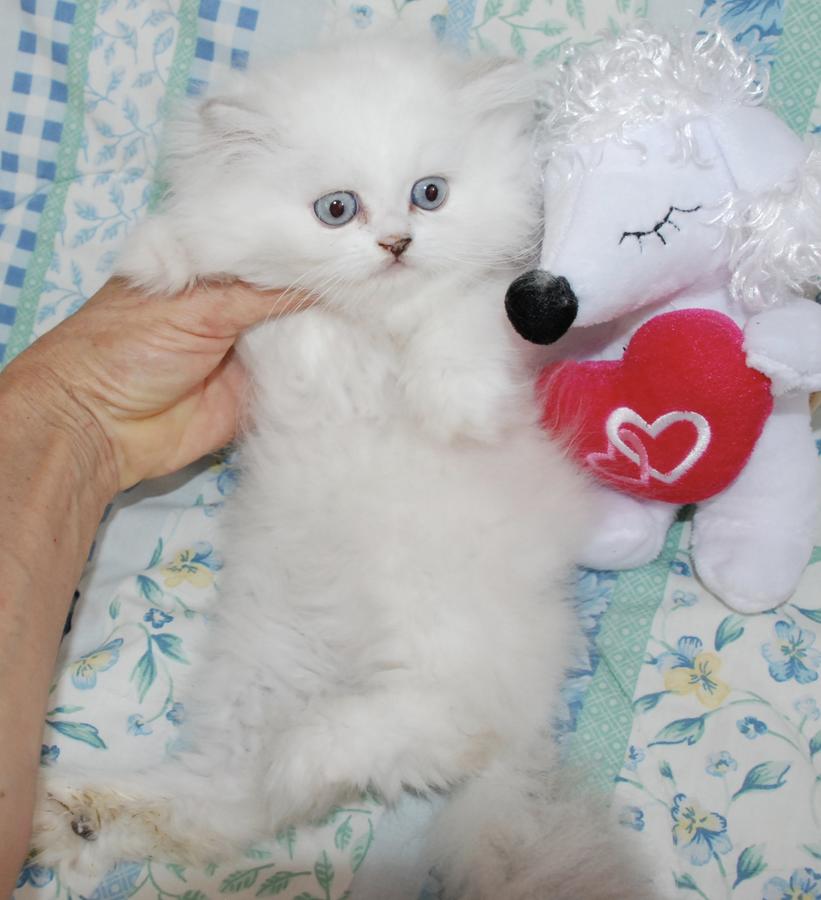
Our Persian  is a cat breed with white eyes and mostly gray and white patterns. It is a small and muscular semi-longhair cat with a soft and silky coat. Persian kitten, it is best known for its docile and placid temperament and affectionate nature. Well train Persian kittens available for adoption and for sale, The name "Persian" is derived from the tendency of individuals from the original breeding stock to go limp and relaxed when picked up, Particularly popular in both the United Kingdom and the breed's native United States, you can adopted your Persian kitten locally, This feline has large, widely-set eyes that are round in shape. Its long, dense coat complements its well-balanced body and appearance


   kittens short History
  
  In the 1960s, a regular, non-pedigreed, light-grey, domestic longhaired cat named Josephine produced several litters of typical cats. Josephine was of a Ragdoll\Bengal type and had litters sired by several unknown male Burmese or Birman -like cats, one of which had the Siamese point coloration. Josephine later produced kittens with a docile, placid temperament, affectionate nature, and a tendency to go limp and relaxed when picked up. When a subsequent litter produced more of the same, Ann Baker purchased several kittens from the owner who lived behind her and, believing that she had something special, set out to create what is now known as the ragdoll. The breed was selectively bred over many years for desirable traits, such as large size, gentle demeanor, pointed coloration, and a tendency to go limp when picked up


 Breed description

   Temperature,
   The Persian is marketed by breeders as having a docile, calm and floppy nature with claims that these characteristics have been passed down from the Persian and Birman breeds. Opinions vary as to whether this trait might be the result of genetic mutation,The extreme docility of some individuals has led to the myth that Ragdolls are pain resistant. Some breeders in Britain have tried to breed away from the limpness owing to concerns that extreme docility "might not be in the best interests of the cat


         kittens Physical characteristics

         The Persian is one of the smallest domesticated cat breeds, with a sturdy body, small frame, and proportionate legs. A fully-grown female weighs from 5 to 10 pounds (2.4 to 4.6 kg). Males are substantially larger, ranging from 10 to 18 pounds (5.4 to 9.1 kg), The genes for point coloration are responsible for the distinctive blue eyes of the Persian. More intense shades of blue are favored in cat shows. Although the breed has a plush coat, it consists mainly of long guard hairs, while the lack of a dense undercoat results, according to the Cat Fanciers' Association, in "reduced shedding and matting


                         kittens Health

One study utilizing Swedish insurance data showed that of the common cat breeds, the Persian and Siamese have the lowest survival rate. They live 15 to 25 years.
    This study indicates the Persian may have a significantly higher number of cats that die of urinary problems, mainly from kidney/ureter issues, but also partly from lower urinary issues. an issue  Persian cats require regular grooming to ensure that their fur does not mat, as with most long-haired cat breeds; some breeders recommend bathing once a month


          travisplyer1982@gmail.com or call or text +1 (765-705-0832) even contact us via WhatsApp's as well    +1 (765-705-0832)